
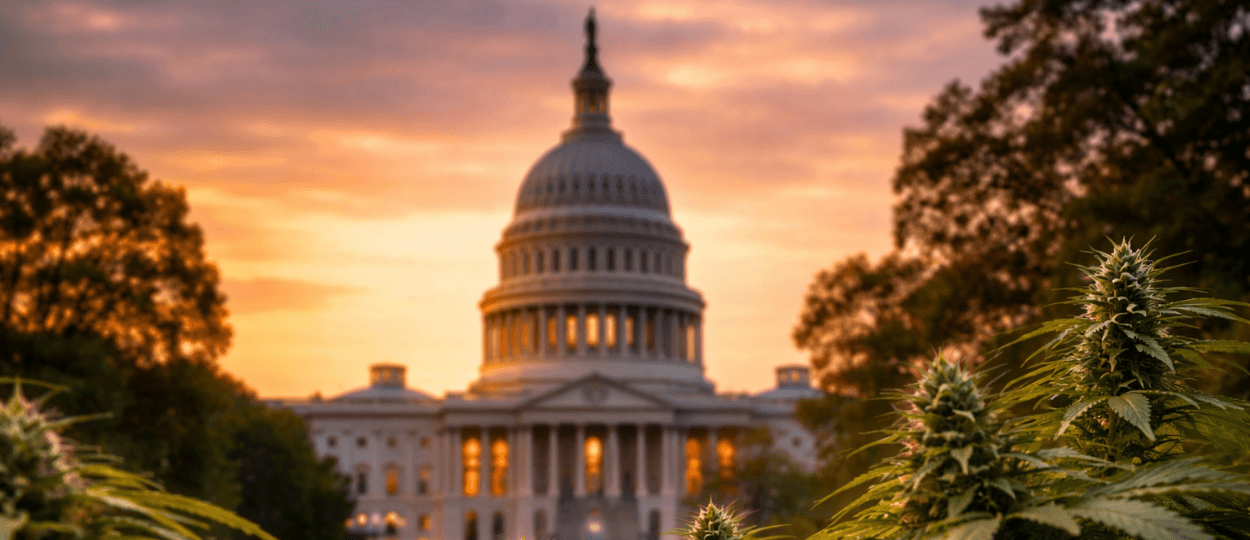
Federal Cannabis Reform Stalls Despite 70% Public Support
Legislative gridlock persists as advocates face uphill battle in Congress

Despite overwhelming public support and dozens of state-level reforms, federal cannabis legislation remains trapped in the same political quagmire that's defined Washington's approach to the issue for decades.
The disconnect between popular will and legislative action has never been starker. Recent polling shows roughly 70% of Americans support legalization, yet comprehensive reform bills continue to languish in committee. Industry advocates and lawmakers alike point to a familiar trio of obstacles: institutional inertia, competing legislative priorities, and the sheer complexity of the federal appropriations process.
"We're not dealing with a lack of momentum or public support," said one Hill staffer familiar with cannabis policy discussions. "We're dealing with a system that moves at its own pace, regardless of urgency."
The Legislative Reality
The challenge goes beyond simple opposition. Even bills with bipartisan co-sponsors face months—sometimes years—of committee review, amendments, and procedural hurdles before reaching a floor vote. The SAFE Banking Act, for instance, has passed the House seven times since 2019 but never cleared the Senate.
That pattern reflects a deeper structural issue. Cannabis reform competes for floor time with defense spending, tax legislation, and appropriations bills that carry hard deadlines. Without those same time pressures, cannabis measures get pushed to the back of the queue.
Meanwhile, the federal-state policy gap continues to widen. Thirty-eight states now permit medical cannabis, and 24 allow adult use. But federal prohibition means businesses in those states still can't access traditional banking, face effective tax rates above 70% under Section 280E, and operate in constant legal uncertainty.
Follow the Money
The financial stakes complicate the picture further. The legal cannabis industry generated $30 billion in sales last year, yet operators remain shut out of interstate commerce and institutional investment. That's created a patchwork of state-siloed markets with wildly different regulations, tax structures, and compliance requirements.
Some industry observers argue this fragmentation actually benefits certain stakeholders. Multi-state operators with enough capital to navigate complex licensing regimes face less competition. State governments collect tax revenue without federal interference. And opponents of reform can point to inconsistent state outcomes as evidence the policy "isn't working."
But that dynamic leaves smaller operators—particularly social equity applicants and legacy market participants—struggling to compete. Access to capital, legal services, and compliance infrastructure increasingly determines who survives in the regulated market.
What's Next
The path forward remains murky heading into 2025. Rescheduling efforts through the DEA could shift cannabis from Schedule I to Schedule III, which would provide some tax relief but leave prohibition intact. Comprehensive descheduling bills like the Cannabis Administration and Opportunity Act face longer odds despite strong advocacy support.
Timing matters more than ever. With a presidential election year approaching, legislative windows narrow as members focus on campaigns and appropriations deadlines. That means any significant movement likely requires either last-minute attachment to must-pass legislation or a dramatic shift in congressional leadership priorities.
For now, the industry continues operating in a holding pattern—growing revenues and expanding state markets while waiting for federal policy to catch up with reality. The question isn't whether Washington will eventually act. It's whether the delay causes lasting damage to businesses, patients, and communities caught in the gap.
This article is based on original reporting by hightimes.com.
Original Source
This article is based on reporting from High Times.
Read the original articleOriginal title: "The Hard Truth About Washington and Cannabis Reform: Time, Money, and More Time"
Related Topics
Related Stories
Hemp Industry Sues DEA Over HHC Ban in Federal Court Challenge
Hemp companies have filed federal lawsuits challenging the DEA's classification of HHC as an illegal Schedule I substance, arguing the synthetic cannabinoid should be protected under the 2018 Farm Bill's hemp provisions.
Kentucky Adds 15 Conditions to Medical Cannabis Program
Kentucky Gov. Andy Beshear expanded the state's medical marijuana program to include 15 new qualifying conditions via executive order while publicly supporting decriminalization efforts.
House Rules Committee Blocks Hemp THC Amendments From Floor Vote
The House Rules Committee blocked amendments Monday that would have prevented a scheduled November ban on hemp THC products, rejecting proposals from Rep. Andy Barr and others.
More from Alex Morgan
View all articles
Social Equity Architect Calls Program a 'Trap' for Black Founders
Hemp Industry Sues DEA Over HHC Ban in Federal Court Challenge
