
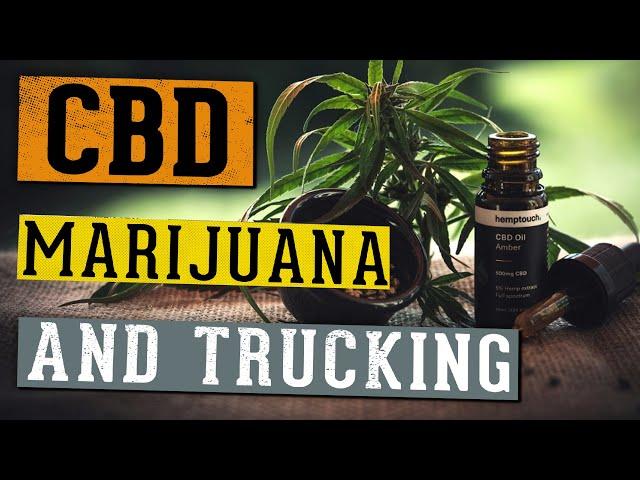
Essential CBD and Marijuana Law Guidance for Truck Drivers
Understanding the implications of CBD use for commercial drivers

Commercial truck drivers must avoid all cannabis products—including CBD—due to federal Department of Transportation regulations that prohibit marijuana use regardless of state laws.
The confusion stems from CBD's legal status under the 2018 Farm Bill, which legalized hemp-derived products containing less than 0.3% THC. Many CBD products are marketed as THC-free and safe for any use.
But Amber Schweer, supervisor of the Owner-Operator Independent Drivers Association's drug testing consortium, warns CDL holders to avoid CBD entirely.
The Problem with CBD
Many CBD products contain more THC than advertised. Testing by FDA and independent laboratories has found significant discrepancies between labeled and actual THC content in CBD products.
Even small amounts of THC can accumulate in the body with regular CBD use, potentially leading to a positive drug test. DOT drug tests screen for THC metabolites—they can't distinguish between THC from marijuana and THC from CBD products.
"We've seen drivers lose their CDL because they tested positive after using CBD products they thought were THC-free," Schweer said.
Federal vs. State Law
While many states have legalized medical or recreational cannabis, commercial drivers fall under federal DOT regulations. Federal law still classifies marijuana as a Schedule I controlled substance.
This means:
- No medical marijuana cards are recognized for CDL holders
- State legalization doesn't apply to commercial driving
- Positive drug tests result in immediate removal from safety-sensitive duties
- Violations can lead to permanent CDL revocation
The prohibition applies even when drivers are off duty in states where cannabis is legal.
The Stakes
Commercial driving is a safety-sensitive occupation. A single positive drug test can end a driver's career, eliminate their primary income source, and potentially prevent them from working in the transportation industry again.
Given these consequences, the risk of using any cannabis product—even legal CBD—outweighs potential benefits for professional drivers.
What Drivers Need to Know
DOT-regulated drivers should avoid all products containing cannabinoids, including:
- CBD oils, tinctures, and topicals
- Hemp-derived THC products
- Cannabis-infused foods or beverages
- Any product marketed as containing cannabis compounds
The only way to guarantee a negative drug test is complete abstinence from all cannabis-related products.
As federal regulations evolve, drivers should stay informed through their employers, industry associations, or direct DOT guidance.
This article is based on original reporting by SSC Oklahoma.
Original Source
This article is based on reporting from www.sscok.edu.
Read the original articleOriginal title: "What Truckers Need To Know About CBD Oils And Marijuana Laws ..."
Related Topics
Related Stories
Hemp Plastic Emerges as Viable Alternative to Petroleum Packaging
New research shows hemp-based plastics can match petroleum-derived packaging in durability while offering biodegradability, potentially disrupting the $370 billion global plastics market.
California Harvest Season Exposes Dark Side of Migrant Trim Labor
A High Times investigation documents exploitation of international workers during California's cannabis harvest season, revealing unsafe conditions and labor abuses that contrast sharply with the industry's progressive image.
Tennessee Sets Hemp THC Rules as June 30 Ban Deadline Approaches
Tennessee regulators finalized hemp THC rules ahead of a June 30 statewide ban, six months after the original deadline. The move ends legal sales of delta-8 and similar products in a state without medical or adult-use marijuana programs.
More from Alex Morgan
View all articles
Social Equity Architect Calls Program a 'Trap' for Black Founders
Hemp Industry Sues DEA Over HHC Ban in Federal Court Challenge
